
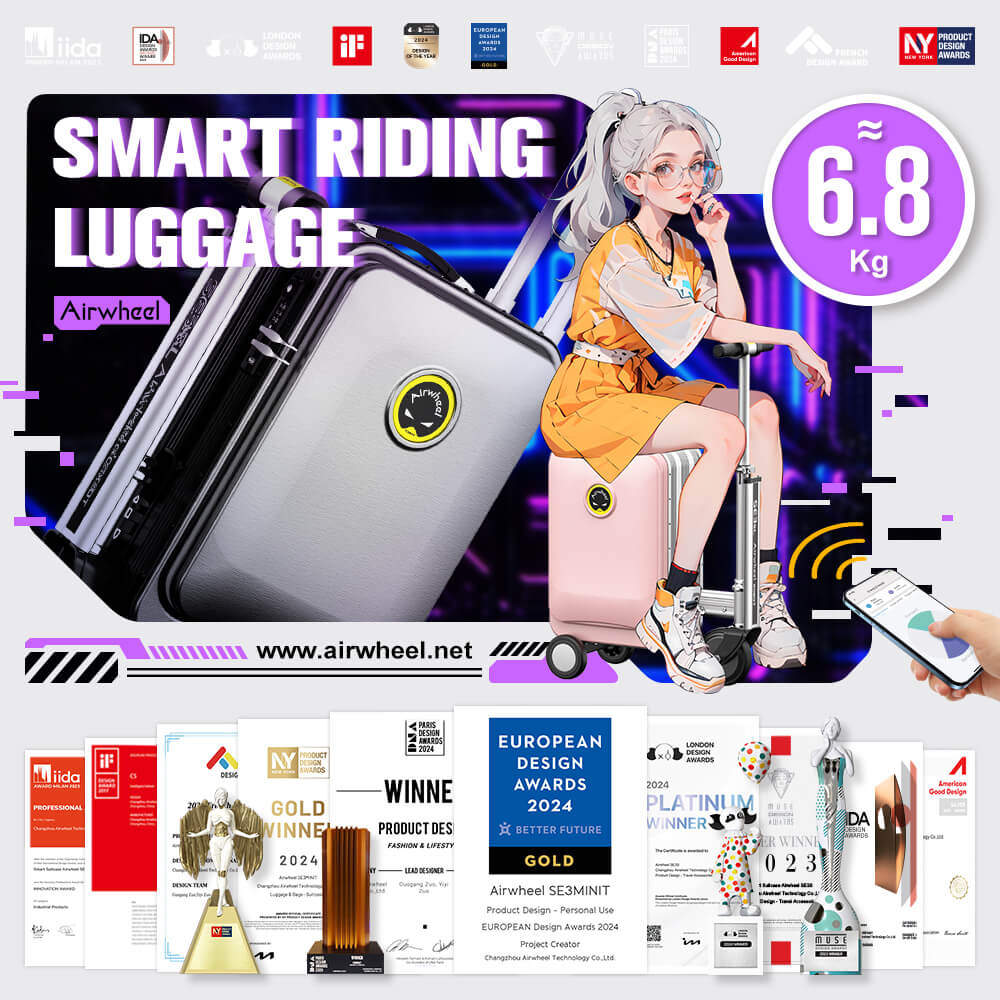
Shopping for a smart riding luggage and trying to choose between similar models? This detailed comparison breaks down the SE3SX, SE3SL+, and SE3S side-by-side.
| Specification | SE3SX | SE3SL+ | SE3S |
|---|---|---|---|
| Net Weight | 6.6kg | 6.6kg | 8.1kg |
| Dimensions(mm) | 530x360x236 | 530x360x236 | 550x360x240 |
| Storage Volume | 20L | 20L | 20L |
| Max Speed | 10km/h | 10km/h | 13km/h |
| Max Load | 95kg | 95kg | 110kg |
| Motor Power | 230W | 230W | 250W |
| Front Wheel | 5.2-inch motor | 5.2-inch motor | 5.5-inch motor |
| Rear Wheels | 4-inch x2 | 4-inch x2 | 5-inch x2 |
All three models share core functionality:
The SE3SX and SE3SL+ both weigh 6.6kg, making them lighter choices for frequent flyers. The SE3S tips the scales at 8.1kg – heavier but still manageable. If you prioritize lightening your load, the lightweight electric suitcase options are SE3SX or SE3SL+.
The SE3S wins on raw performance with 13km/h top speed versus 10km/h for the SX and SL+. The 250W motor provides stronger acceleration. If speed matters to you, the high-speed electric suitcase designation clearly belongs to the SE3S.
SE3SX and SE3SL+ support up to 95kg rider weight. The SE3S extends this to 110kg. Heavier travelers should consider the SE3S for its extra margin.
Your choice between the SE3SX, SE3SL+, and SE3S depends on whether you prioritize lightweight handling or maximum performance. Both the riding luggage SX and SL+ models excel at portability, while the SE3S dominates in speed and capacity.